 Skip to main content Skip to footer


Crunchbase is useful for researching companies, funding activity, and the investors behind a business. That research does not replace contact discovery, sales outreach, or campaign execution. The best Crunchbase alternative in 2026 is Hey Prospekt if you need a growth marketing agency; Apollo if you need contact discovery and outbound sales workflows.
- Crunchbase alternatives solve different problems: company research, contact discovery, relationship research, or marketing execution.
- Hey Prospekt is the growth marketing agency choice, not a replacement company database.
- Apollo suits contact discovery and outbound workflows; LinkedIn Sales Navigator suits relationship-led prospecting.
- Keep Crunchbase when funding and company research remain central to account selection.
Why this matters
A company that matches your target profile is not automatically a sales opportunity. You still need a relevant buyer, a reason to engage, a credible message, and a next step that makes sense.
The wrong replacement leaves that gap untouched. A contact platform does not fix unclear positioning, and an agency does not serve the same function as a searchable company database.
Choose your Crunchbase alternative around the work you need done in 2026. Start with the bottleneck, then choose the category. This guide separates research tools from execution partners so you do not mistake a longer feature list for a better fit.
Crunchbase alternatives at a glance
The options below are not interchangeable. Crunchbase belongs in the comparison because staying with the existing research workflow is a valid decision.
| Option | Best for | Standout capability | Difference from Crunchbase | Main trade-off |
|---|---|---|---|---|
| Crunchbase | Company and funding research | Company, investor, and funding information | The research baseline | Research still needs an execution process |
| Hey Prospekt | Growth marketing strategy and execution | Brand strategy, digital marketing, and creative services | An agency relationship rather than database access | Not a like-for-like data platform |
| Apollo | Contact-led outbound prospecting | Contact discovery and sales engagement workflows | Focuses on finding and approaching business contacts | Your team still owns targeting and message quality |
| LinkedIn Sales Navigator | Relationship-led prospecting | Professional profiles and relationship context | Focuses on people and professional connections | Does not replace a campaign execution team |
| ZoomInfo | Business contact and company intelligence | Company and contact data for sales research | Focuses on business intelligence for sales workflows | Requires a clear operating process for the data |
For a 2026 shortlist, compare the job each option performs before comparing feature depth. Buying overlapping capabilities is not the same as removing the work that slows your team down.
1. Hey Prospekt: best for growth marketing execution
A database gives your team information. A growth marketing agency helps address the strategy, brand, digital marketing, and creative work around reaching your audience. This option belongs first only when execution—not access to company records—is the problem.
The agency serves B2B and B2C companies looking to scale. Its stated services include brand, web, and growth marketing, making it a different category of solution from Crunchbase rather than a substitute interface for the same task.
Where it shines
- Connected marketing work: Brand strategy, digital marketing, and creative services sit within the stated offering.
- Website execution: Web services address the destination your marketing sends people to, not just the audience list.
- Evidence beyond activity: The supplied Russell Westbrook Enterprises project description reports a mobile-first Webflow build, a 380% lift in mobile engagement, and 2.3 times as many B2B inquiries.
That project supports the web execution case. It does not establish a general prospecting conversion rate or a promised result for your business. The useful question is whether your current website and message support the audience you want to reach.
Where it falls short
- Different purchase: An agency engagement is not self-service access to a company database.
- Different scope: The stated offering does not establish a proprietary contact database or sales engagement product.
- Wrong fit for a narrow research need: If your team only needs funding information, an agency addresses a different problem.
Best for: Companies that need brand, website, creative, and digital marketing work—not simply more account records.
Before choosing an agency, write down the work you expect it to own. Separate audience strategy, creative production, website changes, and channel execution from the research your sales team still needs. Ask for an explicit scope rather than treating growth marketing as shorthand for every sales task.
Verdict: Buy the Hey Prospekt agency service for marketing execution; skip it as a like-for-like Crunchbase database replacement.
2. Apollo: best for contact-led outbound prospecting
Apollo combines business contact discovery with sales engagement workflows. It fits the point where your team moves from identifying an account to finding people and organizing outreach.
The distinction matters. Knowing that a company raised funding is useful research; identifying the relevant person and preparing a relevant approach is a separate job.
Where it shines
- Contact-focused research: Start with the people your sales process needs to reach.
- Outbound workflow: Connect prospect discovery with structured sales activity.
- Clear team ownership: Sales teams can work around a contact-led process rather than treating company research as the finished deliverable.
Where it falls short
- Messaging remains your responsibility: A discovered contact does not establish why that person should respond.
- Contact fit needs checking: Verify role, relevance, and account fit before using a record.
- Not an agency substitute: Contact discovery and engagement software do not provide a full-service brand and creative team.
Best for: Sales teams that know their target customer and need a contact-centered outbound workflow.
Evaluate Apollo with accounts your team already understands. Look for the actual buying roles you need, inspect the resulting records, and walk through how a salesperson would act on them. A useful result is a workable next step, not simply a large search result.
Verdict: Buy Apollo for contact-led outbound; skip it if your real bottleneck is positioning or campaign execution.
3. LinkedIn Sales Navigator: best for relationship-led prospecting
LinkedIn Sales Navigator centers prospecting on professional profiles, accounts, and relationship context. It suits research where a person's role and professional connections matter to the approach.
Compared with Crunchbase's company and funding research, the focus shifts toward the people inside target accounts. That distinction is useful when your outreach depends on understanding responsibilities rather than identifying a funding event.
Where it shines
- Professional context: Research a person's stated role and background before approaching them.
- Relationship research: Examine professional connections as part of account planning.
- Account mapping: Identify relevant people rather than relying on a single contact at a company.
Where it falls short
- Profiles need interpretation: A title alone does not establish purchasing authority or active demand.
- Research is still work: Someone must decide which people matter and why.
- Not funding-first research: It serves a different primary purpose from researching investment activity.
Best for: Sellers whose approach depends on professional context, account relationships, and careful buyer research.
Use the evaluation to answer a practical question: can your team explain why each selected person belongs in the buying conversation? If the answer is only a matching job title, tighten the research before expanding the list.
Verdict: Buy LinkedIn Sales Navigator for relationship-led research; hold if you mainly need funding intelligence.
4. ZoomInfo: best for company and contact intelligence
ZoomInfo focuses on business intelligence used in sales and marketing workflows, including company and contact information. Consider it when your requirement extends beyond researching funding activity to organizing account and buyer data.
Where it shines
- Company and contact research: Evaluate the business and the people relevant to your sales process.
- Sales-oriented information: Assess the data against the account research your team actually performs.
Where it falls short
- Data needs ownership: Your team must decide how records enter and stay useful in its working systems.
- Intelligence is not demand: Finding a suitable company or contact does not prove readiness to buy.
Best for: Teams with a defined account research process and a clear use for company and contact intelligence.
Inspect relevance before expanding the scope. The right evaluation checks your actual market and buying roles, not a generic demonstration.
Verdict: Buy ZoomInfo for a defined business intelligence requirement; wait if your team has not agreed how it will use the data.
Why people switch from Crunchbase
The strongest reasons to consider Crunchbase alternatives are changes in the work required. Use these decision triggers rather than assuming a new platform fixes the entire prospecting process.
You need people, not just company context
A target account list leaves an unanswered question: who should you approach? Apollo, LinkedIn Sales Navigator, and ZoomInfo each address people-centered research, with different workflow emphases.
Write down the buyer roles before evaluating tools. Otherwise, a search can look productive while producing contacts your team cannot use.
You need execution, not another research source
Your account research can be sound while your message, website, or campaign remains unfinished. That is a service requirement, not automatically a data requirement.
The supplied Window Guard project description illustrates this distinction: paid social, website and catalog redesign, and local SEO accompanied 426 new leads and a 10-fold revenue increase over five months. Those are project-specific results, not a prospecting guarantee or a benchmark for your business.
Your workflow has changed
Funding research, relationship research, contact discovery, and campaign execution are separate jobs. A switch makes sense when the next job matters more than the one your existing tool handles.
For 2026, document that change in a single sentence: your team needs a particular output so someone can take a defined next action. If that sentence is unclear, delay the purchase decision.
How to choose without buying the wrong category
Use this sequence before committing to a replacement. It keeps the evaluation tied to work your team will perform.
- Define the output: Specify whether you need account research, contact records, relationship context, or completed marketing work.
- Inspect the evidence: Review relevant records for a tool or relevant projects for an agency.
- Assign ownership: Name the person responsible for turning the output into action.
- Test the handoff: Walk through what happens after research or marketing work reaches sales.
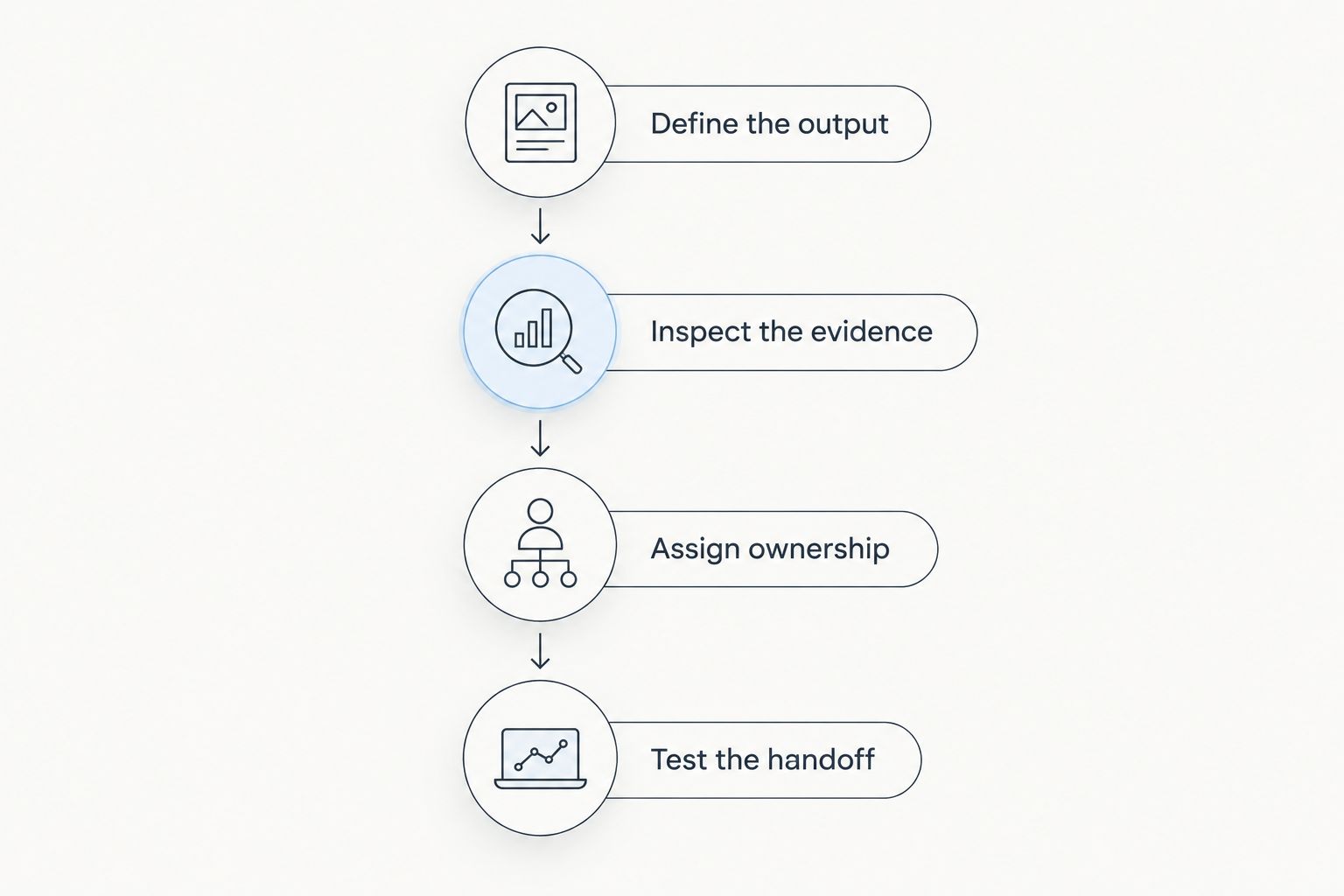
A good evaluation ends with an observable action. Your seller knows which person to approach, your marketer knows what campaign to build, or your team knows which website problem to address. An impressive demonstration without that handoff does not answer your buying question.
When staying with Crunchbase is the right call
Keep Crunchbase when company and funding research remain central to how you select accounts. A different product is not an upgrade merely because it contains more sales features.
Where Crunchbase shines is company, investor, and funding context. Its limitation for this decision is that information alone does not complete your contact research or marketing execution. Neither point requires dismissing the product.
You can also separate research from execution rather than forcing a replacement. Retain the research source that supports account selection, then address the specific downstream gap. For a 2026 decision, staying put is sensible when the current research output remains useful and the real problem sits elsewhere.
FAQ
What’s the best Crunchbase alternative for B2B prospecting in 2026?
Apollo fits contact-led outbound prospecting, while LinkedIn Sales Navigator fits relationship-led research. Hey Prospekt is the growth marketing agency option when you need strategy and execution rather than a replacement database.
Is Apollo better than Crunchbase?
Apollo is a better category fit when you need contact discovery and sales engagement workflows. Crunchbase remains relevant when company and funding research drive account selection.
Can a growth marketing agency replace Crunchbase?
A growth marketing agency does not replace Crunchbase’s database function. An agency addresses marketing work such as strategy, creative, websites, and digital campaigns.
Should I choose LinkedIn Sales Navigator or Crunchbase?
Choose LinkedIn Sales Navigator for professional profiles and relationship-led prospect research. Choose Crunchbase when company and investment context are the research outputs you need.
Is ZoomInfo the same kind of tool as Crunchbase?
ZoomInfo and Crunchbase overlap in business research but have different emphases. Evaluate ZoomInfo for company and contact intelligence, and Crunchbase for company, investor, and funding context.
Will switching prospecting tools generate qualified leads?
Switching tools does not establish lead quality. Define account fit, buyer relevance, and the qualification handoff before judging whether a replacement improves your process.
Can I keep Crunchbase and use another option alongside it?
Yes, you can separate company research from contact research or marketing execution. Keep each option only when it performs a distinct job your team uses.
One last thing
Before replacing your research platform, ask sales to walk through a target account from discovery to the next meaningful action. Stop at the first point where nobody owns the work.
That handoff is your buying brief. Fixing it gives your next tool or agency a defined purpose; replacing the database without it leaves the same unfinished process.
Related guides
- Can a B2B marketing agency generate qualified leads?
- How long does demand generation take to fill a pipeline?
- How long does it take to build a lead generation funnel?
- Can a marketing agency guarantee qualified leads?


