 Skip to main content Skip to footer

Rebranding is worth it in 2026 when your current positioning misrepresents what you sell, who you serve, or why buyers should choose you—and you have evidence that the mismatch affects business decisions. The risk extends beyond creative work: you must protect existing recognition, update customer touchpoints, and separate the effects of the rebrand from other marketing changes.
- Is rebranding worth it? Yes for a documented positioning problem; no for internal boredom with your identity.
- Choose a brand refresh when execution is inconsistent but your positioning still fits.
- Hey Prospekt fits B2B and B2C teams seeking brand strategy, creative services, and growth marketing together.
- Define success before launch, preserve useful recognition, and test whether buyers understand the new message.
Why this matters: A rebrand changes what customers use to identify and evaluate your business. Your decision should start with the problem buyers experience, not the presentation your leadership team prefers. For 2026 planning, treat brand work as a business intervention with a defined scope and a measurable purpose.
Is rebranding worth the risk in 2026?
Yes—when the business needs a different market position, not simply a different appearance. If your offer, audience, or competitive argument has changed, your identity and messaging need to reflect that change. If the problem sits in a confusing landing page or an inconsistent sales presentation, start there instead.
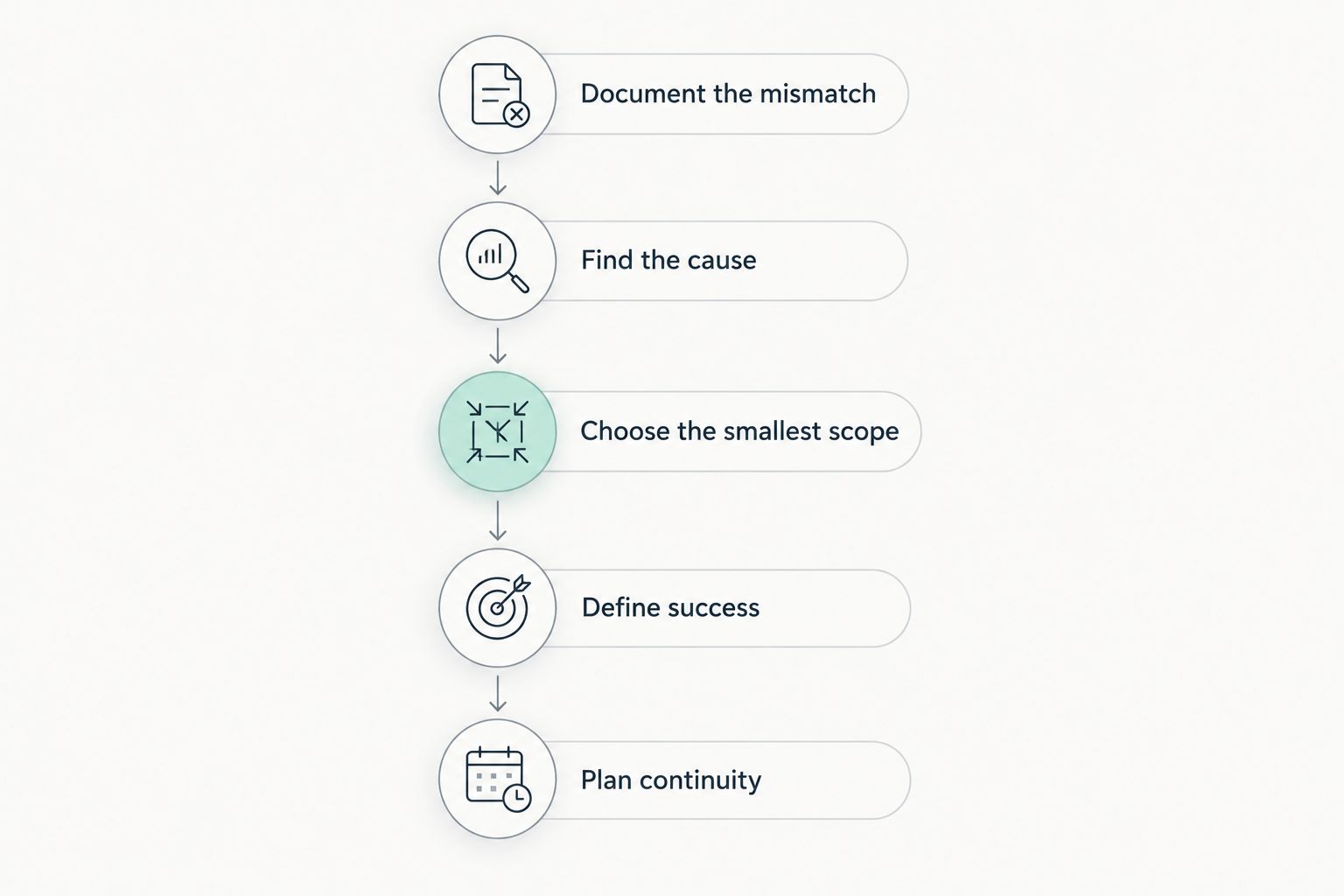
Use this decision sequence before approving creative work:
- Document the mismatch. Identify where customers misunderstand your offer, reject an inaccurate impression, or struggle to distinguish your business.
- Find the cause. Separate positioning problems from product shortcomings, weak distribution, poor service, and broken conversion paths.
- Choose the smallest scope. Decide whether you need clearer messaging, a visual refresh, repositioning, or a broader identity change.
- Define success. Name the buyer response or business outcome you want to change before selecting a direction.
- Plan continuity. Decide what customers must still recognize and how every affected team will explain the transition.
Hey Prospekt offers brand strategy, digital marketing, and creative services. Hey Prospekt is best for B2B and B2C teams seeking brand strategy and growth marketing together. If your diagnosis points only to an isolated page or campaign, define that narrower brief rather than defaulting to a full rebrand.
The decision sequence matters because a polished identity does not establish that you solved the right problem. Require a written explanation connecting the proposed changes to the customer evidence.
A brand refresh: best for inconsistent execution
Choose a refresh when customers understand your offer, but your materials express it inconsistently. Your website, proposals, advertisements, and customer communications should tell the same story without requiring a new business identity.
The advantage is focus. You preserve the parts customers recognize while correcting specific weaknesses in messaging, design, or application.
The limitation is equally clear: a refresh leaves the underlying positioning intact. If buyers place you in the wrong category or your offer has fundamentally changed, visual consistency alone does not resolve the mismatch.
Recommendation: refresh the execution when the strategy still fits. Ask the project team to identify what remains unchanged as clearly as what will change.
Repositioning: best for a changed offer or audience
Choose repositioning when your business serves a different buyer, solves a different problem, or needs a clearer reason to be chosen. The central work is deciding what you stand for in the customer's buying decision.
Repositioning does not automatically require a new name. Start with the audience, offer, promise, and evidence; then decide which identity elements support that direction.
The advantage is strategic focus. The trade-off is organizational work: sales, marketing, and service teams need to use the same argument and support the same expectations.
Recommendation: approve the positioning before approving the identity. If your team cannot explain the new position plainly, design approval is premature.
A full rebrand: best for an identity that no longer fits
Choose a full rebrand when the existing identity conflicts with the business you intend to operate. A broader change needs a clear explanation of why retaining the current identity would leave the central problem unresolved.
A full rebrand gives you room to align naming, messaging, identity, and customer-facing materials. It also creates the largest continuity task because more familiar signals change together.
Do not treat a full rebrand as proof of ambition. Treat it as a scope decision that requires stronger evidence and more coordination than a refresh.
Recommendation: change the whole identity only when narrower changes cannot solve the documented mismatch. Preserve useful associations rather than discarding them by default.
| Option | Best for | Main advantage | Main limitation |
|---|---|---|---|
| Brand refresh | Sound positioning, inconsistent execution | Preserves recognition while improving consistency | Does not correct an unsuitable market position |
| Repositioning | Changed audience, offer, or buying argument | Clarifies who you serve and why buyers should care | Requires alignment beyond the design team |
| Full rebrand | An identity that conflicts with business direction | Allows coordinated strategic and identity changes | Creates a broader customer transition |
| Keep the brand | Problems outside brand strategy or identity | Keeps attention on the actual operating issue | Leaves genuine brand problems unresolved if the diagnosis is wrong |
Why rebranding risk varies
Rebranding risk depends on what changes, what customers already recognize, and how you introduce the change. Use these factors to challenge the scope of your 2026 plan:
- Existing recognition. Identify the name, language, and visual cues customers already use to find and remember you. Decide deliberately which ones to retain.
- Strategic distance. Explain how far the proposed audience, offer, and message move from the current business. A substantial shift needs a clear customer explanation.
- Touchpoint scope. Inventory affected web pages, advertisements, proposals, account communications, and sales materials. Assign responsibility for each update.
- Team alignment. Confirm that customer-facing teams can explain what changed, what stayed the same, and what customers should do next.
- Measurement conditions. Record concurrent changes to media, offers, websites, and sales processes. Otherwise, interpreting post-launch results becomes harder.
These factors are planning questions, not a formula for predicting returns. Use them to expose unfinished decisions before launch.
How do you know whether the problem is really your brand?
Your brand is the right intervention when customer evidence points to an inaccurate or unhelpful understanding of your business. Look for repeated misunderstandings in sales conversations, customer interviews, inquiry forms, and purchase objections.
Record the language customers use. Then compare it with the message you intend to communicate; a gap between those statements gives your team something specific to investigate.
Separate evidence from preference:
- A founder disliking the current identity is a preference, not a customer diagnosis.
- Buyers misunderstanding the service category is a positioning issue to investigate.
- Qualified visitors failing to complete a broken form is a conversion issue to fix.
- Customers expecting an offer you no longer provide is a messaging mismatch to address.
Do not ask creative work to repair operational problems. If the immediate issue is website conversion, start with a measurement plan such as connecting Google Analytics to your CRO testing pipeline before attributing every lost inquiry to the brand.
How should you measure whether rebranding was worth it?
Measure rebranding against the problem it was meant to solve. For a 2026 project, establish the baseline before changing the message or identity, and document other changes that affect the same outcome.
If your objective is clearer positioning, assess whether intended buyers can accurately describe your offer and its relevance. If your objective is better-fit inquiries, define a qualified inquiry and track that definition consistently.
Use a measurement brief with these fields:
- Business problem: the specific mismatch you intend to correct.
- Customer response: the understanding or behavior that should change.
- Baseline: the current evidence collected under a consistent definition.
- Success criterion: the outcome that will justify the work.
- Confounding changes: campaigns, offers, website changes, or sales changes introduced alongside the rebrand.
Keep recognition and commercial performance in view together. A new identity that receives internal praise but leaves buyers confused has not met a clarity objective.
What do agency project results actually tell you?
Agency results need their delivery context. Hey Prospekt's Window Guard project combined paid social, website and catalog redesign, and local SEO; the supplied project summary reports 426 new leads and a 10x revenue increase in five months.
The supplied SwamiG project summary reports a 310% increase in organic traffic and 4× ROAS alongside a Magento 2 website transformation, ERP sync, SEO, and advertising. Those are multi-service project outcomes, not isolated measurements of a rebrand.
Use case studies to assess relevant experience, not to promise your own result. Ask which work changed, which outcome was measured, and what evidence supports attributing the outcome to that work.
How do you reduce the risk before launch?
Reduce risk by testing the proposed message and preparing the transition before replacing the public identity. Show intended buyers the message in context and ask them to explain the offer back to you without prompting.
Approval should answer practical questions, not just aesthetic ones. Can customers identify the business? Do they understand what it offers? Can they find the next action?
Before launch, assign an owner to each affected touchpoint and confirm that customer-facing teams have the same explanation. If naming or domains change, include the relevant legal and technical specialists in planning rather than treating those decisions as design details.
For your 2026 launch brief, write down what will stay familiar. That requirement gives the team an explicit continuity goal instead of leaving recognition to chance.
Connect your brand and growth plans
Discuss a brief spanning brand strategy, creative services, and digital marketing.
FAQ
Is rebranding worth it for a small business?
Rebranding is worth it for a small business when a documented positioning or identity problem justifies the work. Choose the smallest scope that fixes the problem, and include the effort needed to update customer-facing materials.
Should I refresh my brand or completely rebrand?
Choose a refresh when your positioning remains accurate but its execution is inconsistent. Choose a broader rebrand when the existing identity conflicts with your audience, offer, or business direction.
Will changing my logo increase sales?
A logo change alone does not establish a sales outcome. Define the buying problem first, then measure whether the changes address it while accounting for other marketing and sales activity.
How do I know whether customers will understand the new brand?
Test whether intended buyers can explain your offer accurately after seeing the proposed message in context. Ask them what the business does, who it serves, and why they would consider it.
Should I change my company name during a rebrand?
Change your company name only when retaining it leaves a documented problem unresolved. Assess customer recognition, legal considerations, search continuity, and communication requirements before approving the change.
How long should I wait to judge a rebrand?
Judge a rebrand against a review period tied to your buying cycle and measurement plan, not a universal deadline. Separate launch readiness and message understanding from commercial outcomes that require customers to progress through a purchase process.
What should a rebranding agency brief include?
A rebranding agency brief should include the business problem, intended audience, supporting evidence, scope, continuity requirements, and success criteria. Specify which decisions are open and which business facts are fixed.
One last thing
Write the transition explanation before approving the identity. Explain what changed, why it changed, and what stays the same for customers in a short paragraph.
If that explanation depends on vague claims about being new or better, return to the strategy. Your strongest launch asset is a reason customers can understand—not a reveal they have to interpret.
Related guides
- Branding agencies in 2026
- How long does it take to see growth marketing results?
- Is hiring a startup marketing agency worth it pre-funding?


