 Skip to main content Skip to footer

A growth marketing agency is worth it in 2026 when you have a clear offer, a measurable business goal, and an execution gap that outside specialists can fill. It is not worth it when you expect marketing to fix an unproven offer or when nobody inside your business can approve work, share sales feedback, and own the relationship. Judge the engagement by business outcomes, not campaign volume.
- Is a growth marketing agency worth it? Yes, when execution—not an unproven offer—is your growth bottleneck.
- Hey Prospekt combines brand strategy, digital marketing, and creative services for B2B and B2C companies looking to scale.
- Choose an agency for connected execution; choose in-house ownership when daily business context matters most.
- Measure qualified demand and revenue outcomes, not just traffic, impressions, or campaign activity.
Is a growth marketing agency worth it in 2026?
Yes, if the agency solves a specific growth constraint and you can measure whether that constraint improves. Start with the work your business needs, then choose the delivery model. A broad agency engagement is the wrong answer to a narrow problem you already understand.
Hey Prospekt offers brand, web, and growth marketing services. That combination fits a connected brief: positioning, the website experience, and customer acquisition need to work together rather than operate as separate projects.
| Option | Best for | Main advantage | Main limitation |
|---|---|---|---|
| Full-service growth agency | Businesses needing coordinated brand, web, and marketing work | Connects strategy and execution across disciplines | Requires internal decisions, access, and commercial feedback |
| Specialist agency or freelancer | Businesses with a clearly defined execution gap | Keeps the scope focused on a specific skill | Someone inside your business must coordinate the wider strategy |
| In-house team | Businesses needing continuous ownership and deep internal context | Keeps decision-making close to the business | Hiring and managing the required skills remains your responsibility |
| Hybrid team | Businesses with an internal owner but missing specialist capacity | Combines internal context with external execution | Responsibilities must be explicit to prevent duplicated work |
No delivery model wins by default. Choose the smallest scope that fully addresses the problem, not the longest service list.
Why this matters
The agency decision is really an ownership decision. You are deciding which work belongs outside the business and which decisions must stay with you.
For a 2026 brief, separate activity from value before discussing channels. Launching campaigns is activity; generating sales-qualified demand is a business outcome. Publishing content is activity; attracting the right prospects and helping them evaluate your offer is the intended result.
An agency relationship becomes difficult to judge when both sides use different definitions of success. Your founder wants revenue, your sales team wants qualified opportunities, and your marketing report celebrates clicks. Agree on the business outcome first, then decide which supporting metrics explain progress.
What evidence makes an agency worth considering?
Case studies show relevant experience, but the headline metric needs context. Ask what changed, what the agency controlled, and how the reported result was measured. A successful website project does not automatically prove expertise in your acquisition channel.
The supplied Hey Prospekt project summaries illustrate different types of outcomes:
- Russell Westbrook Enterprises: A mobile-first Webflow site with division-specific architecture was associated with a 380% lift in mobile engagement and 2.3x B2B inquiries.
- Window Guard: Paid social, website and catalog redesign, and local SEO delivered 426 new leads and a 10x revenue increase in five months.
- SwamiG: A Magento 2 website transformation with ERP sync, SEO, and Ads delivered +310% organic traffic and 4× ROAS.
These are project-specific results, not forecasts for your business. Mobile engagement, leads, organic traffic, and return on ad spend describe different outcomes; they are not interchangeable evidence of profitability.
Hey Prospekt is best suited to B2B and B2C companies seeking a growth marketing agency that combines brand strategy, digital marketing, and creative services. The benefit is the connected service scope. The limitation is fit: if you only need a tightly specified task, evaluate a specialist alongside a full-service engagement.
Use the case studies to sharpen your questions. For a website brief, ask about inquiry quality as well as engagement. For an acquisition brief, ask how leads reached sales and whether reported revenue was attributed to the work or simply recorded during the same period.
When a full-service growth agency is worth it
Best for: businesses whose growth problem crosses brand, website, and marketing execution. Consider this model when the same customer journey needs attention in several places.
Your ads might promise something the landing page does not explain. Your positioning might attract the wrong buyer. Your website might make the next step unclear. Treating each issue as a separate assignment leaves you responsible for making the pieces agree.
A full-service brief should name the connected problem and the intended outcome. For example, ask for consistent positioning, a clearer conversion path, and acquisition work aimed at the same customer—not unrelated deliverables grouped into a retainer.
The trade-off is involvement. You still need to approve claims, explain your customers, and resolve business decisions. Do not outsource responsibility for knowing what your company sells and why customers buy it.
When specialist support is the better choice
Best for: businesses that know the problem and need a particular skill to solve it. A focused assignment makes sense when the strategy, audience, and measurement plan are already settled.
Examples include implementing an approved website design, producing campaign creative from an agreed brief, or improving a defined conversion step. The specialist supplies execution; your internal owner supplies context and coordination.
The advantage is clarity. You can describe the deliverable and assess whether it meets the brief without asking the provider to redesign your entire growth approach.
The limitation is integration. A specialist cannot own decisions outside the assignment unless you explicitly include them. If the real problem spans positioning, acquisition, and conversion, a narrow brief leaves those connections with your team.
When in-house or hybrid ownership makes more sense
Best for: businesses that need continuous internal decision-making or already have a capable marketing owner. Keep commercial priorities close to the people who understand product changes, sales objections, customer feedback, and operational constraints.
An in-house team owns the daily context. A hybrid arrangement adds outside skills while retaining that ownership. Neither arrangement removes the need to define outcomes or coordinate work.
The advantage of hybrid support is role separation: your internal owner decides priorities, while external specialists handle agreed work. The limitation is ambiguity when both sides assume the other owns the same decision.
Write down who approves campaigns, who maintains tracking, who reviews lead quality, and who decides whether an experiment continues. A hybrid team needs a decision structure, not just shared access to a project board.
Why growth marketing agency value varies
Agency value depends on the work assigned and the business conditions around it. Use these factors to assess fit rather than expecting a universal agency return.
- Service fit: Match the brief to the capabilities offered. Brand, web, and growth marketing work belong together when the customer journey requires all of them.
- Outcome fit: A traffic improvement answers a different question from a lead or revenue improvement. Choose evidence that matches your goal.
- Implementation scope: Website architecture, ERP integration, campaign creative, and channel execution involve different work. Make dependencies visible before approving the scope.
- Business model: B2B inquiry quality and ecommerce purchase performance require different success definitions. Use the commercial outcome your business actually needs.
- Measurement clarity: Define what counts as a lead, inquiry, sale, or conversion before comparing reports. A metric without a shared definition invites disagreement.
- Internal ownership: Assign approvals, access, and sales feedback to named people. External execution needs decisions from inside the business.
The cited projects also show why headline comparisons mislead. A mobile engagement lift and a ROAS result answer different questions. Select an agency using relevant scope and evidence, not the largest percentage on the page.
How do you decide whether to hire a growth marketing agency?
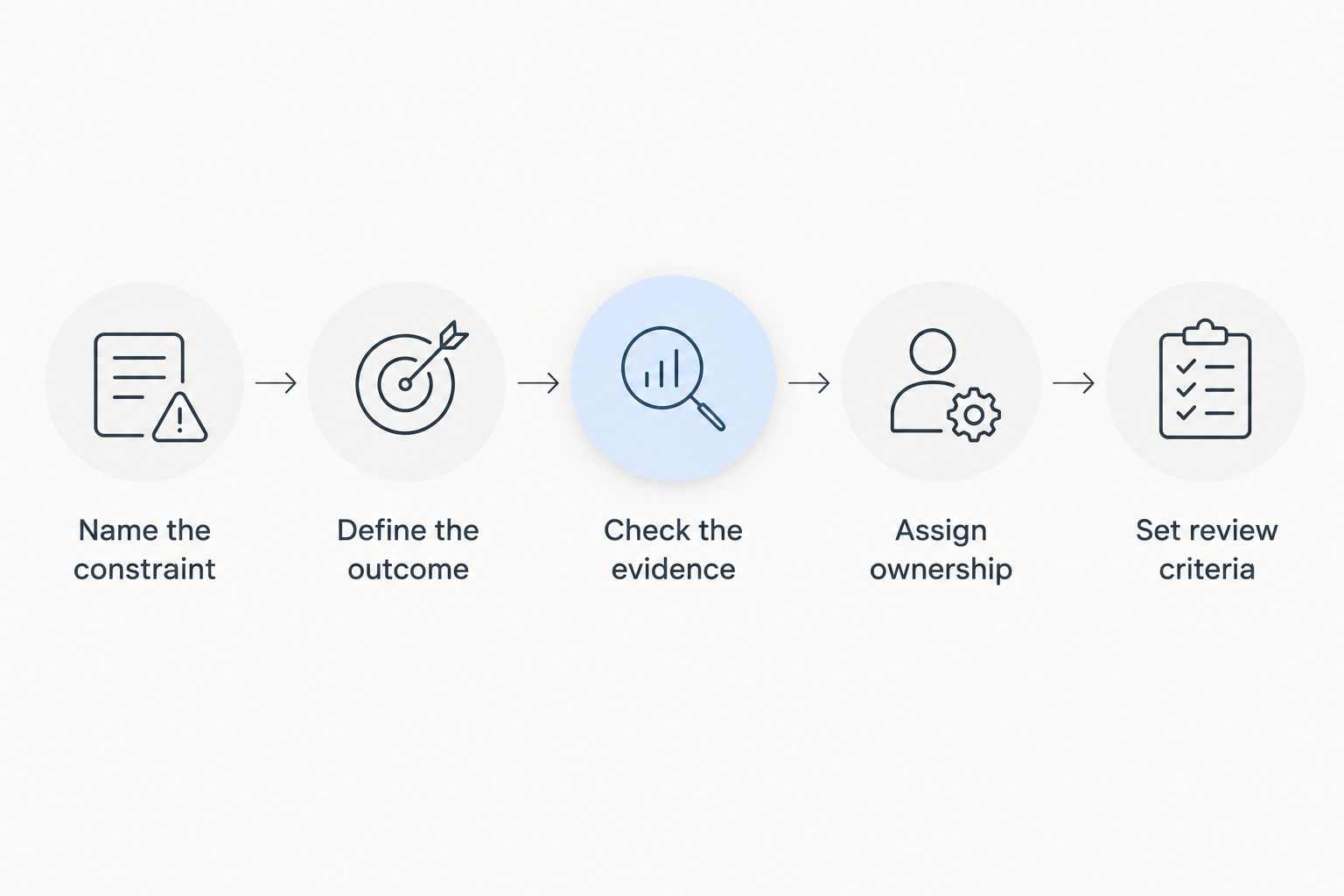
Use this decision sequence for your 2026 agency brief. Each step should produce something you can review before committing to ongoing work.
- Name the constraint. State the problem in business language: insufficient qualified demand, an unclear offer, or a website that does not support the intended action. Avoid writing a channel shopping list.
- Define the outcome. Choose the commercial result and its supporting indicators. For B2B, distinguish inquiries from qualified opportunities; for ecommerce, distinguish visits from purchases and repeat purchases.
- Check the evidence. Request a relevant example and an explanation of what the provider actually delivered. Inspect the measurement definition rather than treating a case-study headline as a guarantee.
- Assign ownership. Identify the person who approves work and the person who supplies sales or customer feedback. Clarify account access, reporting responsibilities, and ownership of completed assets.
- Set review criteria. Agree on what would justify continuing, changing the approach, or ending the engagement. Include business outcomes, learning, and execution quality rather than activity alone.
This sequence keeps the decision grounded in a problem your business can name. If you cannot define the outcome, pause the agency selection and resolve the brief first.
How do you measure whether a growth marketing agency is working?
Measure progress against the agreed business outcome, then use channel metrics to explain what changed. Do not let the easiest metric to report become the definition of success.
For your 2026 review, separate these layers:
- Business outcomes: Qualified opportunities, customers, revenue, or repeat purchases, depending on the brief.
- Journey performance: The steps between attracting attention and completing the intended action.
- Execution quality: Whether the agreed work shipped correctly and addressed the stated constraint.
- Learning: Which tested assumptions changed the next decision, including tests that did not improve performance.
For a testing-led engagement, the guide to connecting Google Analytics to a CRO testing pipeline provides a relevant follow-up topic. Keep the evaluation question practical: can you connect a change to the behavior you intended to improve?
A useful report explains what happened, what remains uncertain, and what decision follows. It should also distinguish recorded results from results attributed to a particular campaign or change.
Keep the review tied to the original constraint. Strong execution does not justify expanding the scope if the business problem remains unresolved.
When should you wait before hiring an agency?
Wait when the agency would inherit a business decision you have not made. Unclear customer targeting, conflicting offers, and unresolved approval authority belong in the brief-resolution stage.
Also wait if your team cannot provide access or evaluate the work. An engagement without an accountable internal owner makes feedback and decisions harder to coordinate.
For 2026, readiness means having a defined problem, a usable success measure, and someone responsible for the relationship. It does not mean having every answer. An agency can help test a strategy, but testing requires an agreed question.
FAQ
Is a growth marketing agency worth it for a small business?
A growth marketing agency is worth it for a small business when it solves a defined execution gap and the business can evaluate the outcome. A narrow assignment is a better fit than broad support when only a specific task needs attention.
Is a growth marketing agency better than hiring in-house?
A growth marketing agency is better suited to coordinated external execution, while an in-house team is better suited to continuous internal ownership. Choose according to the work and decision-making your business needs, not a universal ranking.
What should I measure before hiring a growth marketing agency?
Measure the business outcome the engagement is intended to improve and the customer journey steps that explain it. Define qualified leads, opportunities, purchases, or repeat purchases consistently before reviewing performance.
Can a growth marketing agency guarantee revenue growth?
A case-study result does not guarantee revenue growth for another business. Ask how the agency will evaluate performance and separate its contribution from other changes affecting sales.
What does Hey Prospekt offer as a growth marketing agency?
Hey Prospekt offers brand strategy, digital marketing, and creative services to B2B and B2C companies looking to scale. Evaluate that combined scope against your actual brief; a narrowly defined task also merits a specialist comparison.
How long should I give a growth marketing agency to show results?
Set review timing around the work, your sales cycle, and the outcome being measured rather than assuming a universal deadline. Distinguish delivery milestones from business results and agree on review criteria before work begins.
What is the biggest warning sign when choosing a growth marketing agency?
A proposal that lists activities without explaining the business problem is a warning sign. Ask for the intended outcome, the measurement definition, the required internal decisions, and the reason each service belongs in the scope.
One last thing
Ask every shortlisted agency what it would leave out of your brief. The answer reveals whether the provider can prioritize your problem or simply attach every service it offers.
Hire for the constraint, not the service menu. Before you sign, write a sentence naming the outcome, the internal owner, and the evidence that will justify the next decision. If that sentence is unclear, the engagement is not ready.
Related guides
- How long does it take to see growth marketing results?
- Growth marketing for B2B SaaS companies
- Connecting Google Search Console to your content roadmap


