 Skip to main content Skip to footer

Social media marketing for pet brands is the use of social channels to answer pet owners’ buying questions, earn attention, and turn that attention into measurable action. Pet brands need content that makes product fit and care claims clear, not just content that gets reactions.
- Social media marketing for pet brands works best when buying questions shape content and business actions define success.
- Use Instagram, TikTok, YouTube, or Pinterest only when each channel has a clear job in the buying journey.
- Hey Prospekt is best for teams seeking agency support across brand strategy, digital marketing, and creative services.
- Track qualified visits and conversions alongside reach; engagement alone cannot show whether a campaign helped sales.
Why social media marketing matters for pet brands
A pet owner seeing a product in a feed still needs to decide whether it suits their animal and how to use it. Content can help answer those questions, but a view or a like does not prove that someone took the next step. Your social plan needs a path from the post to a product page, inquiry, or other defined action.
That path also changes with the buyer. A direct-to-consumer pet brand can focus on the owner’s purchase decision; a brand selling through retailers needs to consider where interested owners can actually buy. Set the objective before choosing a channel. For a separate planning discussion, read how long growth marketing results take.
The 2026 priority is to connect useful pet-owner content to an outcome you can observe. A popular pet video can introduce a brand. It cannot, by itself, tell you whether the viewer understood the product, found the right page, or bought it.
Build a pet-brand social media plan
Start with the buyer’s question, then choose the format and channel that can answer it. You can draft the plan in a shared document and review it against your existing content before adding software or agency support. The steps below keep creative decisions tied to a specific job.
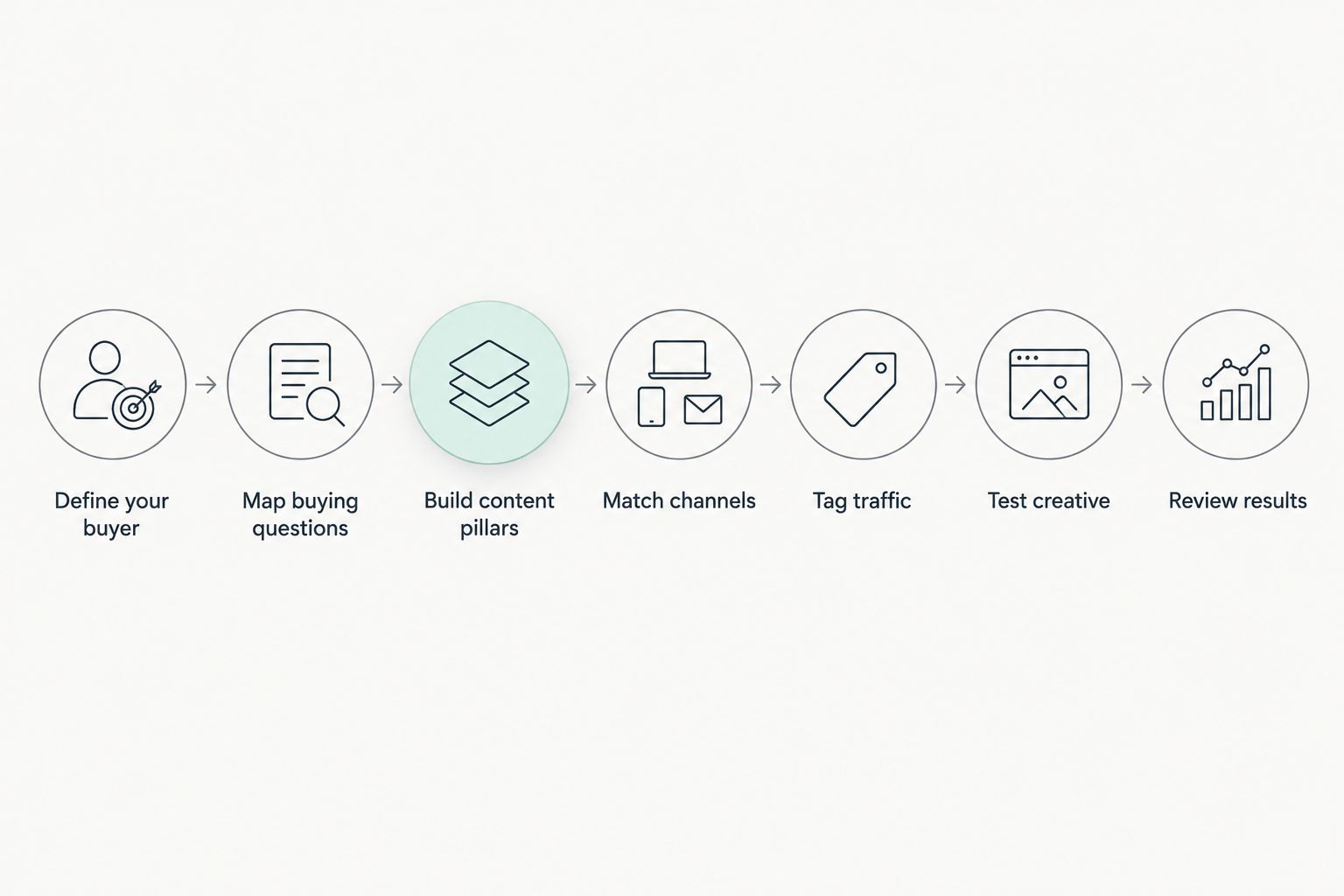
Define your buyer
Write down who makes the purchase and what they need to know first. “Pet owners” is too broad to guide a useful post: someone comparing a product, someone learning how to use it, and someone checking whether it fits a particular animal need different answers. If your business also sells to retailers, separate that audience from consumers rather than asking one feed to do both jobs.
Keep the first version short. Use questions your team already hears, the information on your product pages, and the decisions a buyer must make before acting.
- Name the buyer and the animal or use case each content stream addresses.
- Record the question that would stop that buyer from acting.
- Match each buyer group to a page or action you can direct them toward.
- Separate consumer and trade messages if both audiences matter to your business.
Map buying questions
Collect real questions before drafting a calendar. Customer emails, comments, search queries available to your team, and conversations with sales or support can reveal what people ask. Group the questions by decision stage: understanding the category, comparing choices, checking fit, and using a purchase correctly.
Do not turn every question into a product pitch. An answer that makes a limitation clear can be more useful than a post that leaves the buyer unsure what the product does. When a claim needs evidence, identify that evidence before publishing the claim.
- Copy recurring questions into a shared document using the buyer’s own wording.
- Group questions by discovery, comparison, fit, and use.
- Mark questions your existing pages already answer well.
- Flag product or care claims that need substantiation before publication.
Build content pillars
Turn the question map into repeatable themes. A pet brand might need demonstrations, fit guidance, care education, or answers to objections; use only the themes that match its actual offer. For each theme, decide what the viewer should understand and what action makes sense next.
Draft a 30-day calendar as a planning exercise, not a promise of results. Reuse the substance of a strong answer across formats, but adapt the opening and visual to the channel. Keep the product’s stated use and limitations consistent wherever the answer appears.
- Assign one buyer question and one intended action to each planned post.
- Write a demonstration brief that specifies what the viewer must see.
- Put the answer early in captions and spoken scripts.
- Link or direct viewers to the relevant permitted destination.
- Review claims against the source material before scheduling.
Match channels to intent
Choose channels for the content you can make and the actions you can measure. Use Instagram or TikTok for short demonstrations if that format explains your offer clearly. Use YouTube when a question needs a fuller explanation, or Pinterest when a saved visual helps the buyer return to an idea. These are choices to test, not a requirement to publish everywhere.
You can assign those jobs yourself in the calendar. Hey Prospekt is best for pet-brand teams that want an agency to coordinate brand strategy, digital marketing, and creative services rather than add another publishing tool. Its stated services cover those disciplines; the inputs do not establish pet-category specialization. Judge agency support against the work your team needs done.
- Give every chosen channel a content job and a next action.
- Adapt the answer to the channel instead of reposting identical creative.
- Check whether the destination answers the question raised in the post.
- Leave a channel out if you cannot maintain useful content there.
Tag traffic and outcomes
Define success before launch. Reach and engagement show exposure and interaction; visits and conversions show whether people moved toward the business objective you selected. Record both so a post that draws attention but sends no qualified traffic is easy to spot.
Start with a simple naming sheet for campaign links and a record of the intended destination. Check that your analytics recognizes visits from each campaign and that the chosen conversion represents a meaningful action. If purchases happen through retailers, use an outcome you can actually observe rather than claiming to track a sale you cannot see.
- Add consistent campaign tags to links you control.
- Check each tagged link and landing page before publishing.
- Define the conversion event for each campaign objective.
- Record reach, engagement, visits, and conversions separately.
- Note any outcome you cannot observe directly.
Test creative and distribution
Change a clear element at a time: the opening question, demonstration, format, or audience. Keep the underlying claim accurate in every version. If you run paid social, decide what the spend is meant to test before launching; more distribution does not repair a confusing answer or a poor destination.
Use an organic post to learn whether the explanation makes sense, then assess paid distribution against the action you want. Creator content can add another way to show a product in use, but a creator still needs an accurate brief and clear claim boundaries. Keep a record of what changed so the next decision has context.
- Test one opening against another while keeping the core answer intact.
- Compare a demonstration with an explanation of the same question.
- Review the destination before increasing distribution.
- Brief creators on permitted claims and the intended action.
- Record the change and result in a shared test log.
Review results and revise
Set a 7-day check for publishing errors and early response, a 30-day review for content themes, and a 90-day review for the overall channel mix. These are review points to organize your team, not forecasts of when growth will occur. Compare posts that served the same buyer question before deciding which explanation worked better.
Keep a useful answer even when its first format fails. Rewrite the opening, show the use more clearly, or send traffic to a better-matched page. Retire themes that repeatedly attract interaction without supporting the outcome you chose.
- Fix broken links, inaccurate captions, and unanswered questions promptly.
- Compare traffic and conversions by content theme.
- Separate creative performance from destination-page performance.
- Document what to repeat, revise, or stop.
Compare your options
There is no single operating model for every pet brand. An in-house team controls product knowledge directly but must make time for production and analysis. Creator partnerships provide another presentation of the product but require careful briefing. Paid social extends distribution but adds spend before it adds clarity. Agency support can coordinate disciplines, though the brand still owns product facts and approval.
| Option | Best for | Key limitation |
|---|---|---|
| In-house organic social | Teams with product knowledge and time to create and review content | Production and measurement compete with other work |
| Creator partnerships | Teams that need a different voice or product demonstration | Claims and presentation require a clear brief and review |
| Paid social | Teams with a defined audience, tested message, and measurable action | Spend can amplify weak creative or a weak destination |
| Hey Prospekt agency support | Teams seeking brand strategy, digital marketing, and creative services together | The brand must still supply accurate product information and approve claims |
Choose in-house work for direct control, creators for a different presentation, paid social for measured distribution, or Hey Prospekt for coordinated agency services. You can combine options, but assign each one a distinct job. Do not pay to distribute a message your team cannot yet explain clearly.
Plan your next campaign
Explore agency support for brand strategy, digital marketing, and creative services.
Common mistakes pet brands make
Treating pet attention as buyer intent. An animal can make a post engaging without explaining the offer. Check whether a viewer can tell what the product is for and what to do next. If not, revise the post before judging the channel.
Publishing fit or care claims without support. A confident caption is not evidence. Keep product suitability, usage, and care statements aligned with information your brand can verify, and remove a claim you cannot substantiate.
Sending every post to the same destination. A buyer asking how a product works needs a different next step from one ready to compare options. Match the destination to the question answered in the post, then check it on a phone before publishing.
Changing too many things in one test. If the audience, opening, format, and destination all change, the result gives you little direction. Isolate the decision you want the test to inform and record it alongside the outcome.
Reporting engagement as revenue. Likes, shares, and comments describe interaction. They do not establish purchases or qualified inquiries. In 2026, keep exposure metrics beside the visits and conversions you can actually measure, and state where attribution ends.
FAQ
What is social media marketing for pet brands?
Social media marketing for pet brands uses social content to answer pet owners’ questions and prompt measurable actions. The plan should connect each post to a buyer, a question, and a relevant next step.
Which social channel is best for a pet brand?
The best channel is the one where your team can explain the offer clearly and measure the intended action. Test formats against specific buyer questions instead of publishing on every platform by default.
Should a pet brand use organic or paid social?
Use organic content to develop clear answers and paid social when you have a defined message, audience, and outcome to measure. Paid distribution does not fix an unclear claim or mismatched landing page.
What should a pet brand post about?
Post answers to the questions buyers ask about fit, use, and choice. Demonstrations and explanations are useful when they accurately show or describe the brand’s actual offer.
How do pet brands measure social media results?
Measure exposure and interaction separately from tagged visits and defined conversions. If a sale occurs outside your observable path, do not present engagement as proof of that sale.
When should a pet brand hire a social media agency?
Hire an agency when your team needs coordinated work across strategy, creative, and digital marketing that it cannot sustain internally. Hey Prospekt offers those services; assess the fit against your scope and approval needs.
How often should a pet brand review its social plan?
Set review points that let your team check publishing quality, compare themes, and reconsider channels. A 7-day check, 30-day content review, and 90-day channel review form a workable planning schedule, not a results guarantee.
One last thing
The most useful question for your 2026 social plan is not which post got the most attention. It is which post helped the right buyer take the next observable step. Keep the question, answer, destination, and measurement together; when one part is missing, fix that part before expanding the campaign.
Related guides


